
Our Photos
Other Travel Blogs
Navigation
Creative Commons

.


Do You Enjoy Travel Stories?
This website chronicles our trip around the world in 2006. It has lots of photos, videos and stories. We invite you to come in, relax and enjoy the scenery.
~Lee and Sachi LeFever
To see what we're up to now, check LeeLeFever.com or CommonCraft.com
Our Recent Dispatches Are Below. 
A Dispatch is a report from our trip. Browse via keywords or global map.
That's All Folks!
Dear reader, this dispatch concludes a 2 year odyssey for us – 1 year of preparation and 1 year of international travel. And so it ends with one last dispatch before this site is frozen in time.
Before we say goodbye, we want to remind you that a trip like this is something you can do too. We often hear statements like “I wish I could do a trip like that” or “I could never do that now”. Our message is that you can do it if you’re willing to make the trip a priority in your life. The hardest part is mental – convincing yourself that a year of travel is a realistic and achievable goal. Once you’re convinced, good long-term planning accounts for everything else. It may not happen next year of or in five years, but the key is to start planning now. You’ll be surprised at how things fall into place.
- Step 1: Set a realistic departure date (this enables you to plan ahead) and stick to it
- Step 2: Alter your lifestyle to start saving money responsibly
- Step 3: Tell your friends and family (a little peer pressure does wonders)
If you need help, we wrote a lot about our preparation and what we called “The Monetorium” – a change in lifestyle built around financing your next big adventure. Further, you can always contact us with questions.
Lastly, we want to extend an earth-sized thank you to the friends, family and readers who made us feel at home where ever we were. Your comments, emails and advice gave us more support than we can put into words. We hope that, through this web site, our trip became your trip too.
A Collection of Our Favorite Photos from 2006
As we’re closing up, I wanted to share a small collection of our favorite photos from the trip. As I posted recently, we took over 14,000 photos over the course of the year, all with a point-and-shoot camera (a Pentax Optio WP). Like all our photos, these are untouched with the exception of minor cropping.
OK, on to our favorites:
This is a Costume Play Kid in Harajuku, Tokyo, Japan.

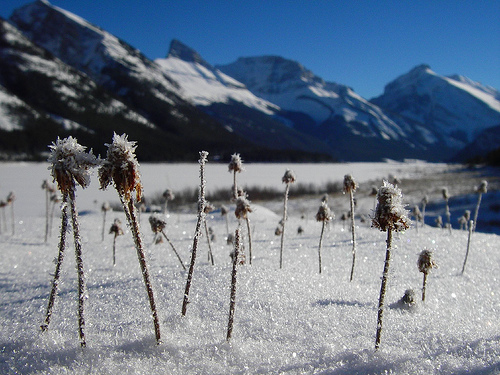
Snow Flowers while dogsledding near Banff, Alberta, Canada.
This little girl just happened to step right into place at the Amber Fort, Jaipur, India.

A violent curl at Kaena Point, Oahu, Hawaii

A Mongolian Horseman on the Mongolian Steppe. Part of the Trans-Siberian railway.

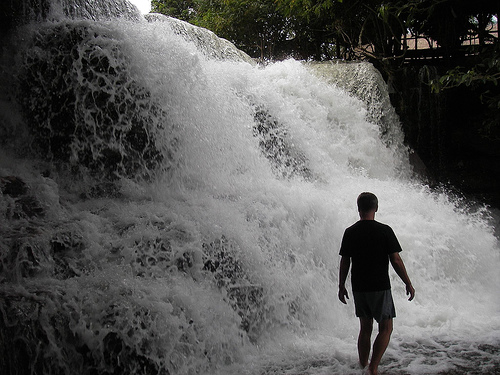
Kabal Chai Waterfall near Sihanoukville, Cambodia
Cyclo in the monsoon, Hoi An, Vietnam

Thai Boy Fishing Near Bangkok, Thailand

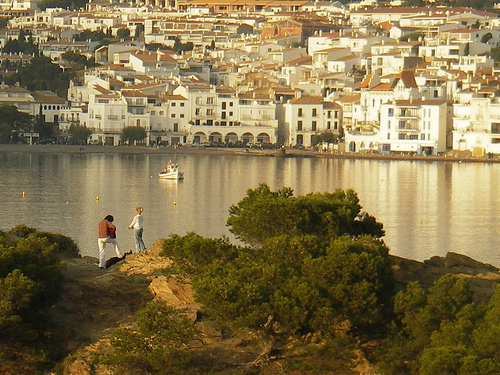
Romance with guitar, Cadaques, Spain.
Brother and Sister, Sri Lanka

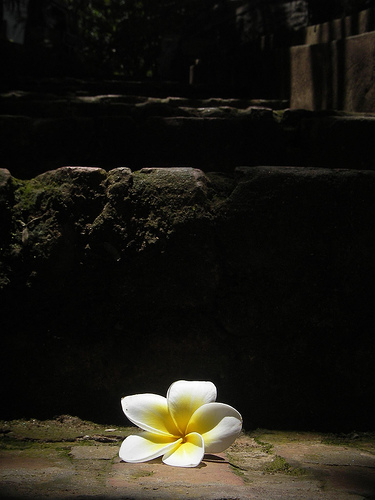
Plumeria, Luang Prabang, Laos.
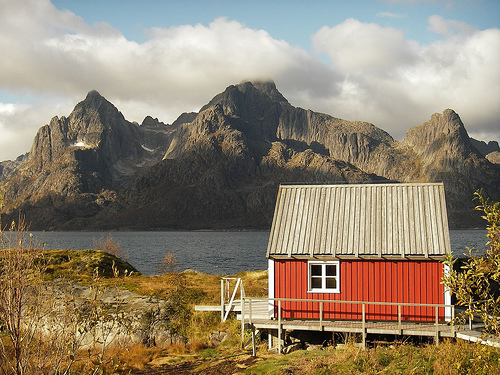
Lofoten Islands Fjords, Arctic Circle, Norway.
If you like these, I bet you'll dig the panoramas.
Video: Driving 4600 Miles in 2.2 Minutes
This video is a bit of an experiment. Shortly after beginning the US road trip, I got the idea to do it and starting trying to capture the trip from a single perspective. You'll just have to watch it to see what I mean.
I absolutely fell in love with creating videos during our trip and I'm amazed by what is possible. I couldn't get over how easy it was to edit the videos (using software that came with my computer) and share them on our web site. After a day on the road I could have a 3 minute video edited and posted within a couple of hours. This just wasn't possible for the average person a couple of years ago.
If you're considering a trip like ours, consider using video as a way to capture the experience and put it on the web. Not only will it be fun, but your friends and family will feel even more connected to you and your experience. Like my brother said "it's so great to be able to hear your voice."
The Big List of Highlights and Lowlights
This is such a hard thing for us to do. To list the best or worst experiences, countries, cities, etc. is like trying to list a year’s worth of your favorite foods. The complexity and variety of a year's places or experiences can’t be boiled down to a list so easily. So, we’ve done our best to provide a few lists that reflect some of the highlights and lowlights of the trip. The items in the lists are in no particular order.
The links below link to corresponding dispatches or keywords on the site.
Favorite Countries Overall
Favorite Experiences
- Riverboarding in
- Elephant Training in
- Driving the Lofoten Islands in the Arctic Circle, Norway
- Trans-Siberian Railway
- Ger Camping in
- Franz Josef Glacier Hike
- Tokyo's Tsukiji Seafood Market
- Riding the Bullet Trains in
- Sumo Wrestling Tournament, Tokyo, Japan
- Worlds End,
- Overnight Doubtful Sound Cruise, New Zealand
- Swimming with Wild Dolphins in Kaikoura, New Zealand
- Dog Sledding in
- Surprising Lee's Parents on Their 50th Anniversary
Not-So-Favorite Experiences
- One Whole Day for a Plane Ticket in Singapore
- Losing Our Phone in
- Ruining Our Camera at the Great Barrier Reef
- The Road to
- Sachi the Stinger Magnet
- Lee's Shoulder Dislocating in New Zealand
- Minibus Ride from Vang Vieng to Vientiane, Laos
- 9 hour bus ride Sihanoukville to Siem Reap, Cambodia
- Da Lat, Vietnam
- Hot Boxing in
- The Quickest Sickness in
- Rental Vehicle Broken into in
Favorite Cities
- Hanoi and Saigon,
- Luang Prabang,
- Prague, Czech Republic
Favorite Original TwinF Videos
About halfway through the trip, we bought a video camera and started creating short videos to capture a different view of our experiences. Making the videos consumed me soon after. I fell in love. These are some of our favorites (the links go to corresponding pages on this site). All videos can be viewed here.
The Trans-Siberian Railway was an experience we'll never forget. This video was from an afternoon of heavy vodka consumption with Russian locals and travelers that ended in yours truly losing a few hours. I think it captures the experience:
The Vodka Train (02:30)
Before we got the real video camera, we shot some video with my point and shoot Optio WP, which is waterproof. When Typhoon Prapiroon hit Macau off the coast of China, we went out into it with the waterproof camera:
Typhoon Prapiroon (02:42)
Somewhere along the way I was inspired to eat strange things on camera - I call it the Jackass Effect. This one is shot from Beijing, China. We hear about this video a lot from friends and family:
Scorpions for Dinner (02:47)
You might also like the video from Hong Kong where I almost barf eating a Century Egg (fermented egg).
I tried to get a little stylistic in the industrial city of Ekaterineburg, Russia, which seems like a classic post-Soviet city in recovery. I really sensed a feeling of coldness and dispair while we were there. It's not that bad, but I tried to capture what I that feeling the best I could. The music is "The Cold Part" by Modest Mouse.
Leaving Siberia (02:30)
The highest rated video on You Tube was also shot in Russian Siberia at Lake Baikal, which is the oldest and deepest lake in the world. I think part of the appeal is related to the video being educational. The music is "You Can Have It All" by Yo La Tengo.
Incredible Lake Baikal (02:52)
From an emotional perspective, the video we shot of surprising my parent's on their 50th anniversary is the best. I can't watch it without getting a little misty-eyed.
Coming to America for the BIG Surprise (03:28)
This video was a surprise. I had no idea Sachi was shooting it, but it is so funny now to see. Watch how my feet react to the pain of a tattoo:
Tattoo Foot Dance (00:09)
TwinF By The Numbers
We've been geeking out a little and trying to summarize the trip according to statistics. We think it's pretty darn interesting.
We'll start with the basics...
- Days on the road 366
- Countries Visited 29
- Hotels 101
- Planes 40
- Trains 32
- Boats 19
- Busses 20
- New Local Friends 19
- Cars Rented 9
- Motorcycles Rented 7
Now, let's look at the web site. TwinF was (officially) opened on October 3rd, 2005 and closed on January 6th, 2007. In about 15 months:
- We posted about 530 dispatches (350 while on the road)
- You (and us) posted about 875 comments
- 450 of you became TwinF members
- You shared 125 travel experiences
- We posted 24 original videos
- We posted 140 dispatches from our mobile phone
- Current Links on Technorati: (296 links from 87 blogs)
- Current Alexa rank: 171,443
- Current Google Page Rank: 6
What about photos? Ah, yes. Photos are interesting... the links below go to Flickr photos sets.
- Total photos taken: 14,340
- Total photos shared on Flickr: 1,502
- Total panoramas created: 94
- Average total photos taken per day: 39
- Average photos shared on Flickr per day: 4.2
- Country with most photos: Japan (2,026)
- Country with most photos/day: Sri Lanka (75)
- Country with most Flickr photos/day: Banff, Canada (12.5)
Lesser Known Backpacking Travel Tips
Throughout the trip, when the inspiration struck, we would type a few travel tips into our phone. The majority of the tips below came from spur-of-the-moment revelations on the road, now in more organized and long form.
Gadgetry:
- To save battery power turn off mobile phones - being connected to or looking for the network drains the battery. The same is true for laptops and wi-fi signals. Turn em off.
- When you get to a hotel room, open your computer and look for an unsecured wi-fi signal. You’ll be surprised often.
- Carry two batteries for all gadgets. Though, a computer battery may be an exception.
- If you are using a mobile phone for more than a few weeks in a country, buy a SIM card for a local network when you arrive. It's what the locals use and you would have a local phone number with free incoming calls from home
- If you want to be able to charge more than one gadget at once, get a travel splitter or multiple outlet adapters for each format.
- Always think redundancy - back up often and send home DVDs of your pictures.
- DVDs hold a lot more pictures than CDs for back-up purposes - 3 times the amount. Most internet cafes offer DVD burning services.
- Invest in lots of camera memory (lSD cards, memory sticks). You do not want to consistently be hamstrung by a camera that is full of pictures. A 1GB card with 5megapixel photos was enough for us.
- If you have a laptop, move photos from the camera to the laptop daily. Always leave the room with 2 charged batteries and an empty memory card.
- Take your computer to the Internet cafe and plug it into their network with the Ethernet cable. They will know how.
- Wrap your computer in some sort of sealable plastic bag before packing it away. Wetness happens.
- Keep your valuable electronics on your person when in transit. Don't put your computer in a bag under a bus.
- People can’t steal what they don’t see. Limit gadgetry use in public.
Hotel Living:
- Never, ever miss an included breakfast.
- Many cheap hotels require that you insert the key into a slot in order for the power to come on. While it saves energy, it means you can’t charge electronics while you’re out of the room. Often you can use a business card in the slot instead of a key.
- Don't leave the room for the day without a map, local currency, identification and the room key.
- Try to resist giving the front desk your key when you leave – this is very insecure. Notice that when you return, they will give you any key you request.
- If your hotel does not serve breakfast, remember to go to a store on the way home at night to get something for the morning.
- Unless the city gets full consistently, don't make reservations in advance. Get there; find your favorite neighborhood and then a place to stay.
- If you are going to be in one city for more than a week or so, consider renting an apartment. A kitchen and washer /dryer are so nice sometimes.
- If you know the part of the city where you want to stay, make a reservation in advance for a single night at a hotel in that area, even if it is more expensive. Then, when you arrive, walk around to hotels and find a better deal for the rest of your stay.
- For most major cities, two nights is not enough as it leaves only one full day for exploration. Three nights is usually a good amount if you're on the move. More is better.
- The combination of your padlock is a risk. You may be asked for it if your bags are lost on international flights (they may need to open the bag). Make it unique - not associated with bank accounts, etc.
- When unlocking your padlock for your bag, remember to spin the numbers once so your combination is not displayed for others, like the housekeeper, to see.
General:
- Tear unused pages out if your guidebook.
- In inexpensive countries like
- When wandering a
- Buy clothes made of synthetic fiber - they are lighter, stay cleaner and are easier to wash and dry quickly.
- Days of the week can start to blend together. The biggest problems happen on Sundays when a lot of businesses are closed and Mondays when museums often close.
- In packing your backpack, make sure you pack it the same each time, giving each item a specific place. When something is missing you'll know.
- Buy a backpack that is built for travel and not camping. The best ones open from the side, allowing access to everything quickly instead of bags that open from the top only - requiring an unpacking to reach the bottom.
- A clean and free bathroom is only as far as the closest McDonalds.
- Take a flashlight.
- In public, you will never be judged or create a spectacle for being too quiet. This is made more difficult with alcohol.
- Look for English language weeklies in cities to find out about events.
- Check local pharmacies for prescriptions that are expensive from home. Beware of fakes in
- Do like the Spanish and have a siesta. Explore for a few hours in the morning, nap in the heat of the afternoon and go back out for the evening. This is sustainable for long periods.
- Only rookies get sunburned. Be liberal with strong sunscreen. Wear a hat.
- When getting up from a park bench, airplane seat or any place where you sat, turn around and look back at the area to ensure you didn't leave anything.
- Use the local mail service to send home items you are not using. Most useful when changing climates.
- Remember that you can’t do everything. Relax, take a deep breath and enjoy what you *can* do.
4 Days Left Till TwinF Becomes Frozen
For the past year, TwinF has been our baby, our home, our object of interest and we are quickly approaching the day when we stop writing here. In fact, we have decided to close the site this coming Saturday, January 6th - exactly one year from the day we left Hawaii for New Zealand. From that point on it will be frozen in time - no new updates. Between now and then, we plan to post lists of our favorite things - photos, videos, experiences, countries etc. It should be fun.
It's a sad moment for us, really. We have had such a great time with the site and it's connection to you as our online companion. It's hard to let go and I'll miss it, really and truly. The connection will end here, but it will sprout in other places, where we'll continue to live online in one form or another.
For those of you who want to continue to keep up with us through my writing, photos, videos, etc., tune into Lee LeFever dot com. I've already started blogging a little there and it will turn into our personal home on the Web. In fact, I'm committing myself to posting one picture per day to the site for all of 2007. Don't expect to be impressed on a daily basis. :)
If you're interested in our consulting business, it has also come back out of "hibernation" to give our business a home on the web once again. See: Commmon Craft - Social Design for the Web.
Again, keep an eye out for our favorites and other goodies coming your way soon.
Contemporary Art and My Problem with "Supposed-To"
I wrote this just before coming home and it's hard for me to post it because I don't want to sound completely ignorant of art. I think my feelings are related to a distaste for the art critic establishment (or what I know of it).
I suppose you’ll say I’m shallow, or cynical or lack sophistication, but I am not moved by the majority of contemporary art I’ve seen lately – particularly multimedia art. Yesterday we went to MACBA (
Over the past year, we’ve both tried to take a de-mystified look at the world we’ve seen and I think it has extended to art in some cases. This means looking at something in terms of what we really see or feel and not what we’re supposed to see or feel. In MACBA, it frustrated me to read the cards by an art expert or the artist that decodes the artist for the layman. An actual example:
Though his oeuvre is difficult to classify in one specific tendency, it possesses a significant conceptual component that expresses displacement and lack of communication and thus a negation of the very existence of contemporary society.
Oh, I get it now. He is negating the existence of contemporary society.
For multimedia art, I don’t want to have to be told that there is a statement about the world hidden in the slides of suburban
Aside from the artist’s peers, art critics and the artists own statements, I wonder how meaning or statements would be derived? How closely would the artist’s vision of the piece translate to those of us that operate outside the art world? And, if meaning is only derived from those privileged few, does it matter that I don’t get it? Is it even supposed to have meaning for me?
Here’s an example. This is a 22 second video from a
Now, consider the exact same video. Only this time, consider this statement:
The artist is clearly making a statement about the closed and oppressed nature of Japanese society. The commuters are being closed off from the rest of the world - even as they are squeezed from every side to fit in behind society’s closing doors. It makes painfully clear the nature of the Japanese experience.
OK, maybe you see it a little differently now, maybe not. You know what though? This is what I was thinking when I shot this video – er, this was my vision for this piece:
I wonder if this is rude to video these people? Man, that train is crowded. I’ve really got to hold this camera still. Oh look, she’s wearing mask - that will be interesting. They are so quiet. It is ever going to leave? I’m getting hungry.
My point is to illustrate how a lot of the contemporary art we’ve seen makes me feel by assigning extraordinary meaning to a video that was never intended to have deep meaning in the first place – it is just a video of people on the subway – right?
Perhaps I lack depth, intellect or an eye for art, but some of it just doesn’t move me and I’m not going to pretend that it does just because its how I’m suppose to feel. The art establish may agree that a piece is a statement about transcendence of gender roles in urban civilizations, but to me, it’s still just pictures of old people in a park. And I am OK with that.
TwinF Tech Report – Russia Scandinavia and Europe
As I’ve done a few times on our trip, I’d like to get a little geeky and provide our experiences with mobile networks, Internet access and mobile blogging across regions of the world. We try to buy a local SIM card and experiment with the local networks via prepaid mobile phone plans, when reasonable. I cannot vouch for the completeness or accuracy of this information – it changes quickly and my perspective is one of a traveler.
See Also:
We moved quickly on the Trans-Siberian Railway, so it didn’t make sense for us to get a SIM card that may only works for a few days.
Internet: Wifi access is growing quickly in the major cities we visited, with access being very common
Mobile: If there is anywhere a mobile device should work, it is
Internet Access: We found free wi-fi to be quite easy to find in cities like
Mobile: We entered
We bought a Vodafone prepaid SIM card in
Within a couple of days, we had both GSM and GPRS working on the phone. Then, we left
Then lesson here is to watch out for roaming charges within
Internet: In most of
A final note: A gadget that would be amazing to have while traveling is a wifi detector so that you could be walking through a

In general, across all 29 countries we visited (except
Site design by 
